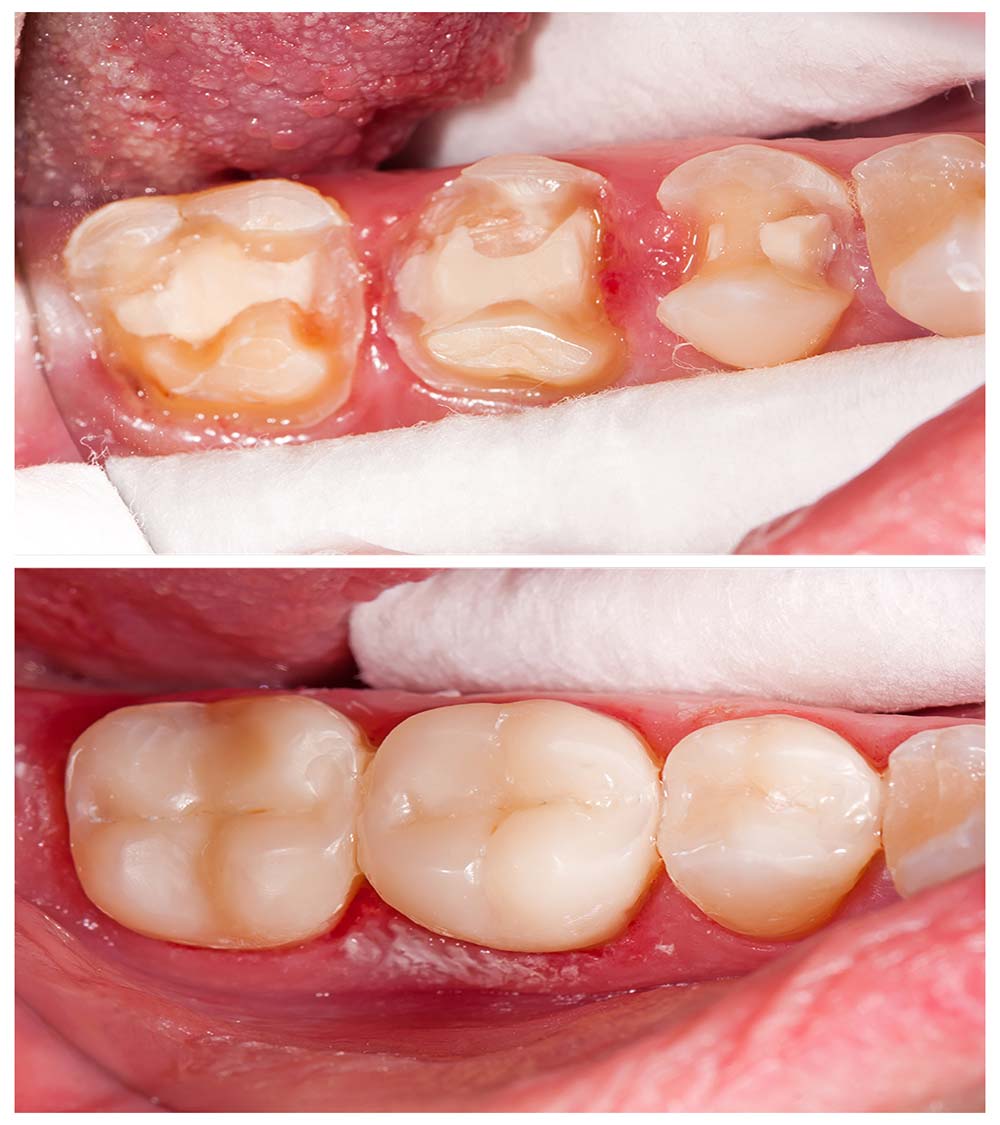
Inlay
Fits within the contours of the tooth, between the cusps — for damage too large for a filling.
When a cavity or crack is too large for a filling, a lab-made porcelain inlay or onlay restores the tooth’s strength and chewing power — and keeps more healthy tooth than a crown.

Both are made in a laboratory, like crowns and veneers, and bonded to the remaining tooth.
Fits within the contours of the tooth, between the cusps — for damage too large for a filling.
Also covers part or all of the chewing surface, returning the strength of the missing part of the tooth.
Decay or the old filling is removed and the tooth shaped.
An impression goes to the lab, where your inlay or onlay is made.
The porcelain piece is bonded to the tooth and the bite checked.
| Treatment | Price (THB) |
|---|---|
| Composite inlay | from 6,000 |
| Ceramic inlay | from 10,000 |
Prices may change. Ask about current promotions.
An inlay is fabricated to fit well within the contours of the tooth, and is cemented to the remaining tooth structure. It is an excellent choice when the extent of damage is too big and rendering filling ineffective, while an onlay fits within the contours of the tooth and covers part or the entire chewing surface of the tooth to be restored. It goes far beyond a filling in returning the original strength and chewing power to that missing part of your tooth.
Porcelain inlay and onlay provide a more durable and attractive restoration compared to conventional filling. Inlays and onlays are fabricated in a laboratory like crowns and veneers.
Porcelain is more durable and natural-looking than a large conventional filling, and restores more strength.
When enough tooth is left, yes — it keeps more of your healthy tooth, because less needs to be removed.
Send your details and we'll contact you to confirm a time. Prefer chat? Message us on LINE, WhatsApp or Facebook.